Ann Bancroft brought a sled dog to school
Two teachers noticed how hard she was trying. Years later, Bancroft’s students followed her journey to the North Pole.
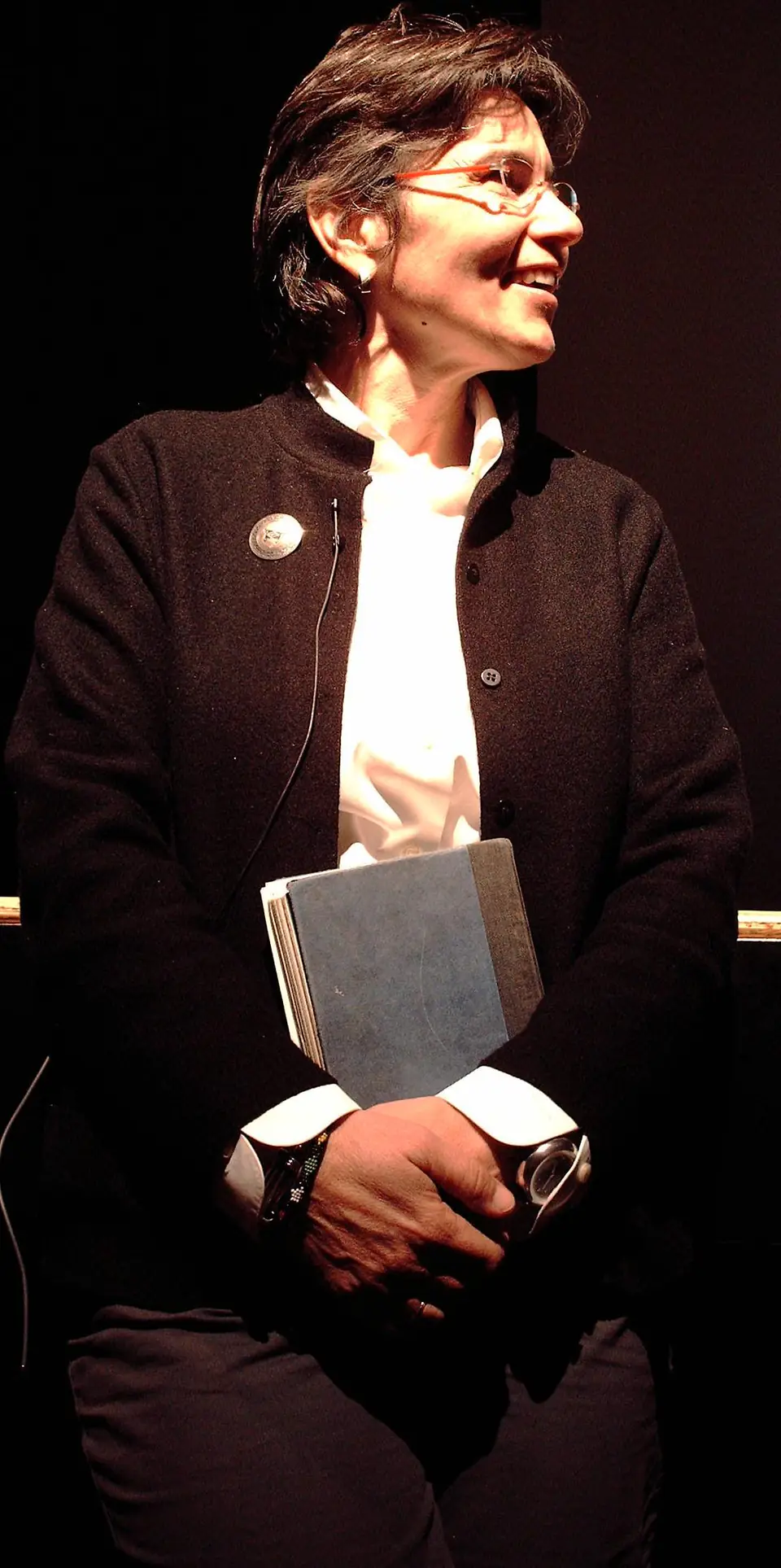
Ann Bancroft speaking in Rochester, Minnesota, in 2006.
In May 1986, Ann Bancroft went back to the Minneapolis school where she had taught. She brought a husky that had helped pull her sled to the North Pole. While she was away, the school had been following the expedition through art, journalism, and math. It was then she realized she could teach beyond the classroom.4
What her teachers saw
In seventh grade, two of Bancroft’s teachers had paid attention to how hard she worked and how little that effort showed in her schoolwork. They suggested testing for dyslexia. Her parents were relieved to have an explanation. Bancroft told Yale’s dyslexia center she hated feeling different. Tutoring and summer school continued, and she missed art, music, and sports to make time for extra academic help.1
When a new school let her take part in those activities again, some of her confidence returned. She went on to study education. In college, an adviser tried to get her to drop sports. Bancroft defended what she had learned on the field and, with the help of a recommendation from her high school coach, finished the practical part of her teaching degree.1
What people can show depends partly on the work you put in front of them. In OpenIQ’s Mindspace, you can explore a few kinds of thinking by doing them. Try rotating an object, remembering a layout, or tracking moving targets and see which approaches you reach for first.
A stone for the journey
Bancroft was the only woman on the 1986 North Pole expedition. She later led a team of women to the South Pole and crossed Antarctica’s landmass by ski and sail with Liv Arnesen.23
She remembers picking up a stone on the Canadian shore before that first polar expedition. The weight in her chest pocket reminded her of solid land and of home. Later, before crossing Antarctica, she visited the prison on Robben Island where Nelson Mandela was held and took a stone from there. On the ice, she could touch the pocket near her heart and think of what others had endured.5
Bancroft said the children following an expedition could pull her back to the work when she felt a journey might fall apart. They had a teacher on the ice. She had a classroom rooting for her.4
Sources
- Yale Center for Dyslexia and Creativity — Ann Bancroft’s account of school and assessment
- Ann Bancroft Foundation — biography and expedition timeline
- Guinness World Records — Bancroft reflects on the 1986 expedition
- Minnesota Department of Natural Resources — an interview with Ann Bancroft
- Ann Bancroft — seven memories for her seventieth birthday
Photo by Jonathunder · GFDL 1.2 · Resized for web
