Carol Greider: seeing the scientist beyond a score
The Nobel laureate's account of dyslexia and graduate-school interviews shows why a result needs the context of a person's work.
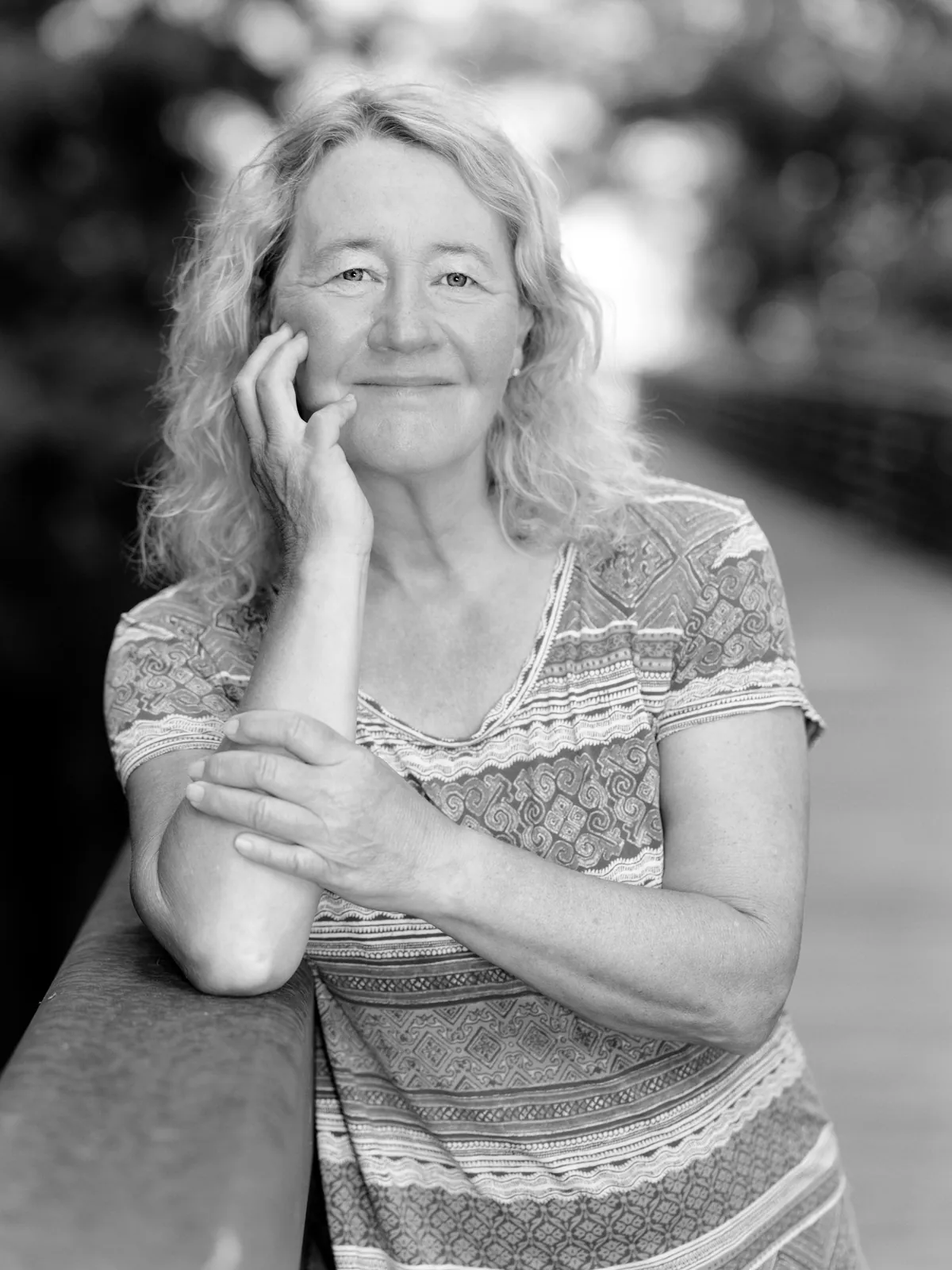
Carol Greider in 2021.
“Carol Greider in 2021” — Christopher Michel, via Wikimedia Commons (CC BY-SA 4.0). Resized and converted to WebP.
Before Carol Greider shared a Nobel Prize, her graduate-school applications presented a puzzle. Strong grades and laboratory experience sat alongside poor GRE scores. Most programs rejected her; the two that interviewed her saw more.1
Greider recalls being taken out of class for remedial spelling lessons and struggling to sound out words. She learned to memorize spellings instead. Understanding her dyslexia later gave those school difficulties an explanation beyond the judgments she had made about herself.1
As an undergraduate at the University of California, Santa Barbara, she found a setting where she could put her curiosity to work. In the laboratory, she could learn through research and experiments. It was a setting that made her interest in biology concrete, and graduate study offered a way to keep following it.2
Caltech and the University of California, Berkeley gave Greider the chance to interview. At Caltech, she discussed science and explained her dyslexia and poor test scores. At Berkeley, she met Elizabeth Blackburn and was drawn to her work on chromosomes and telomeres. Both institutions accepted her; she chose Berkeley and Blackburn’s lab.13
The GRE connection makes her story especially relevant at OpenIQ. Our free GRE Math Test lets you try GRE-style quantitative questions for yourself, working through numerical relationships and mathematical reasoning. It offers a concrete place to explore that part of your ability. A result becomes more informative when you can connect it to the problems you solved, the approaches you used, and the questions you found difficult.
In Blackburn’s lab, Greider investigated telomeres, the protective ends of chromosomes. On Christmas Day in 1984, she observed the first signs of telomerase, the enzyme that helps maintain them. The finding grew from experimental work, repeated checks, and following an interesting question. In 2009, Greider, Blackburn, and Jack Szostak shared the Nobel Prize in Physiology or Medicine for their discoveries about chromosome protection. The distance between an admissions score and that research career is what makes her account so striking.2
Greider has reflected on how adapting to dyslexia may have shaped her work. She believes drawing on context and bringing different information together helped her as a scientist. Her explanation adds something to a score: an account of how she learned to approach a problem.1
You can bring that same curiosity to your own results. OpenIQ’s AMEX verbal assessment explores vocabulary, knowledge, and verbal reasoning across eight subtests, while AGCT brings verbal, quantitative, and spatial questions together. Trying different kinds of problems gives you more to work with than an old label such as ‘good at tests’ or ‘bad at math.’ You can notice where an answer comes quickly, where you need a different strategy, and what you want to explore next.
Greider’s story makes a good starting point for a better question: what can you learn about the way you think? Start with the assessment that interests you, look closely at your results, and keep your own experience in the picture.