The star Henry learned to draw
Henry Molaison couldn’t remember practicing. The pencil marks showed that he was learning anyway.
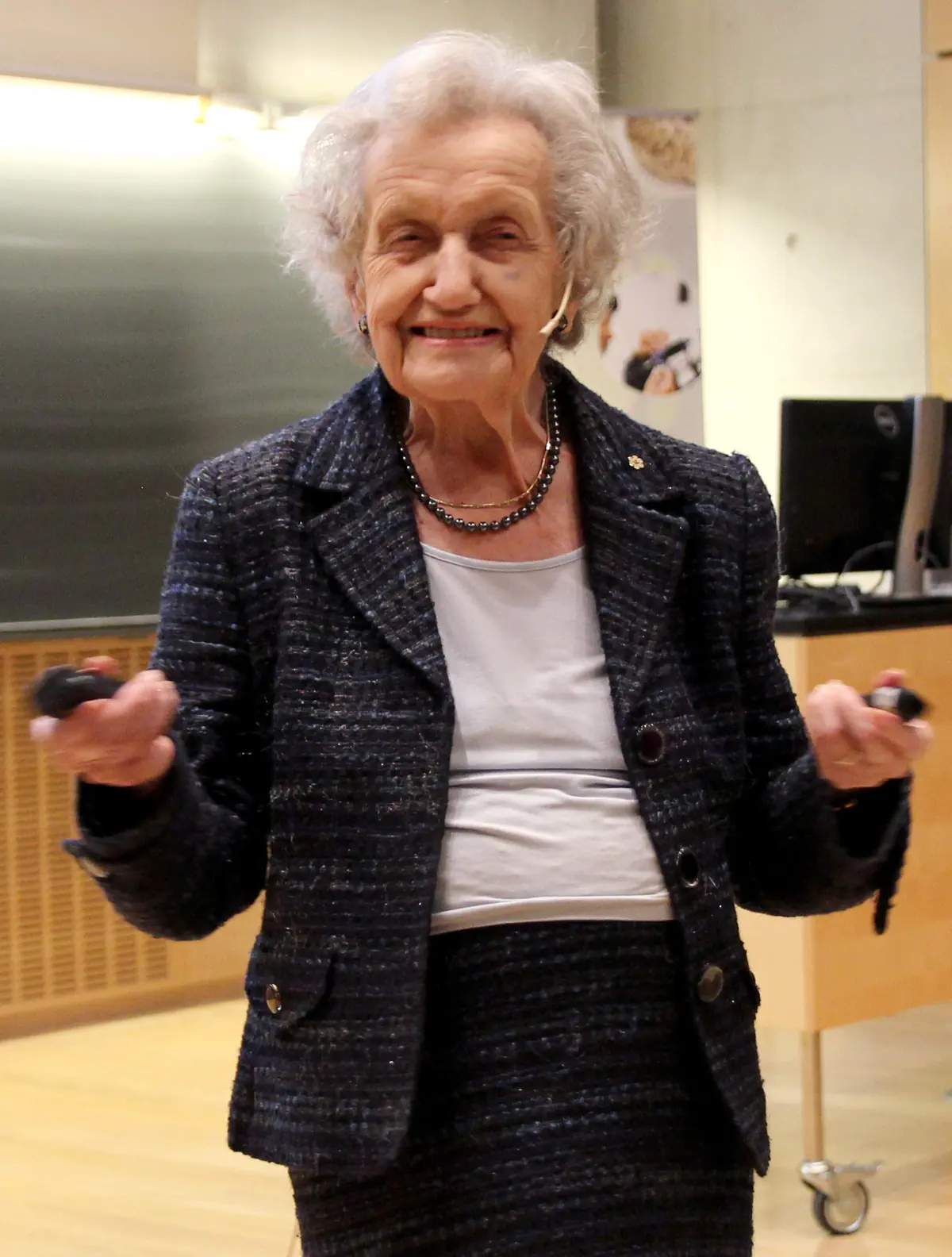
Brenda Milner in 2014.
Henry Molaison could see his hand only in the mirror. He had to guide a pencil between the outlines of a star. As he repeated the task over three days, he crossed the lines less and less. He didn’t remember doing it before.1
A cup of coffee later
Neuropsychologist Brenda Milner traveled to Hartford, Connecticut, by night train with portable testing equipment. After surgery for severe epilepsy in 1953, Molaison struggled to form new memories of events. In an early test, Milner gave him something to remember and left for a cup of coffee. When she came back a few minutes later, he couldn’t recall the material.23
A maze proved difficult. By the time Molaison reached the end, he had forgotten where he began. The mirror test changed the question. Milner could count how many times the pencil left the path and see whether that number fell with practice. Across thirty trials, it did. She had evidence he could acquire a skill even though he couldn’t remember the practice that taught him.1
Two ways to remember
The experiments helped establish that memory has different systems. Remembering an event and learning a movement could come apart. The 2014 Kavli Prize recognized Milner’s work as part of a wider discovery about specialized networks for memory and cognition.4
Milner also recalled another man with severe memory problems who retained the skills he’d learned as a glove cutter. He could keep working alongside his father. The ability to keep making something with familiar tools had a place in a family’s daily life.3
The task matters when you ask what someone remembers. In OpenIQ’s Mindspace, try holding a layout in mind or tracking moving targets. Pay attention to how the need to remember a position differs from the need to follow an object in motion.
Milner worked with Molaison for more than thirty years. He never remembered her name. On the page, there was a star he had learned how to draw.2
Sources
Photo by Per Henning/NTNU · CC BY 2.0 · Resized for web
