Steven Spielberg started with two toy trains
A home movie camera let him replay a crash. Decades later, a diagnosis gave him another way to understand his childhood.
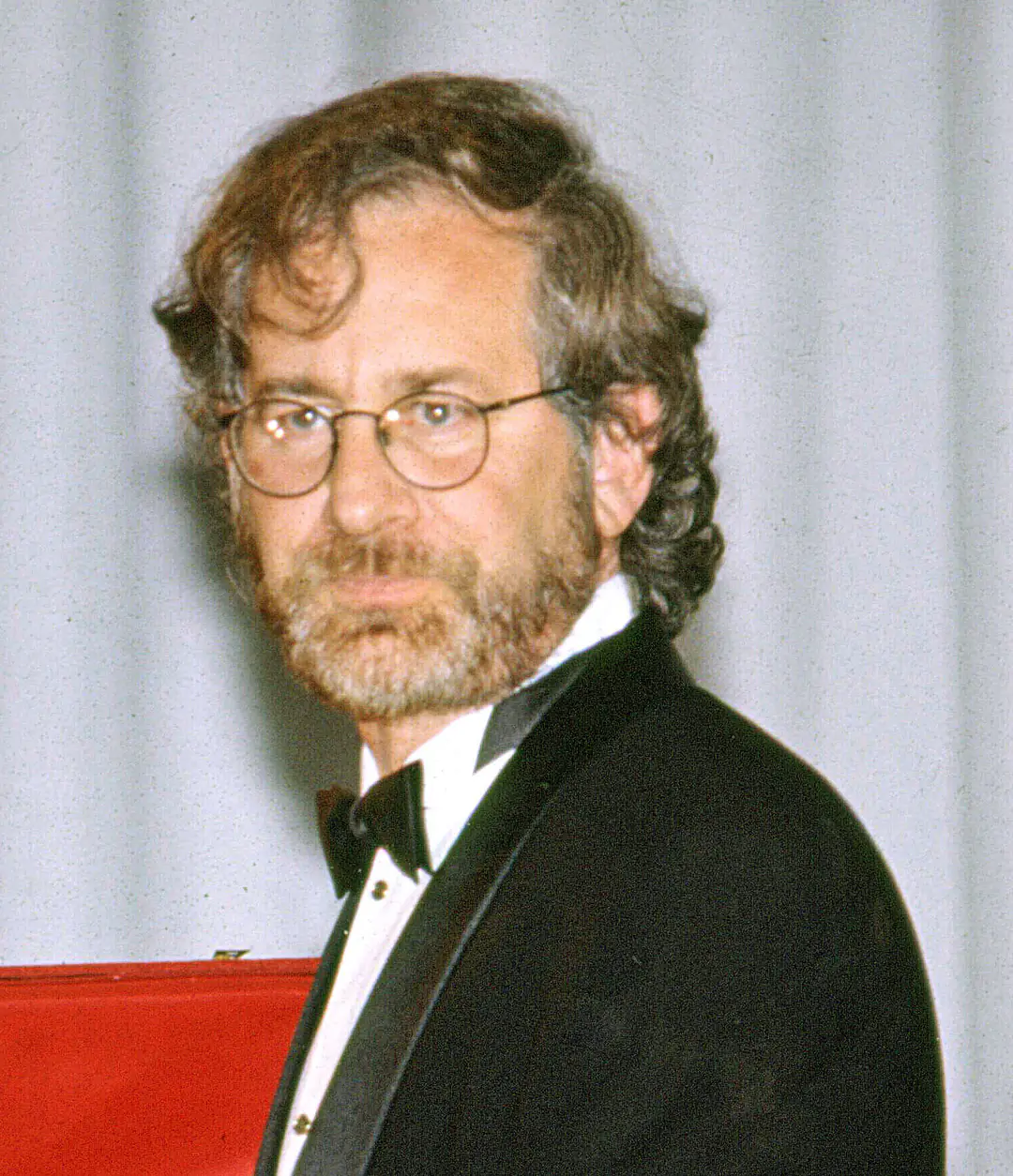
Steven Spielberg at the Venice Film Festival in 1993.
Steven Spielberg kept crashing his toy trains. He’d seen a collision in a movie and wanted to watch it happen again. His father warned him that if he broke the trains again, he could lose them. So Spielberg borrowed a home movie camera and set it down by the tracks. He could replay the crash as often as he liked.2
For a Scout photography badge, he got permission to make a movie instead of taking still pictures. He cast friends, neighbors, and his sisters in a Western. At its screening, the troop laughed and applauded. He still remembered the rush of making something and finding out what it did to a roomful of people.2
There’s a pleasure in working out where objects should go and what happens when they move. OpenIQ’s Mindspace gives you a few small problems you can work through by turning a shape, remembering where something was, or following it as it moves.
What he learned in his sixties
School had been painful in ways the camera couldn’t fix. In a 2012 interview with Quinn Bradlee, Spielberg remembered falling behind in reading, being bullied, and feeling ashamed. He was around sixty when he learned he had dyslexia. He called the diagnosis the “last puzzle piece.”15
His short film Amblin had won him a television directing contract while he was still a college student. By the time he had an explanation for reading, he had already spent decades making films. He returned to his childhood on screen in The Fabelmans, drawing on his earliest movies and his family’s life.3
Speaking at Harvard in 2014, Spielberg recalled that E.T. began with an idea for a story about his parents’ divorce. The alien stranded on Earth gave him a way to tell it. It was his first deeply personal film, he said.4
Spielberg still takes longer to read scripts, he told Bradlee. The director who made a crash he could watch whenever he wanted learned to give himself the time a page required, too.5
Sources
- Quinn Bradlee interview — Spielberg on dyslexia, via the International Dyslexia Association
- Academy of Achievement — Spielberg’s account of his first films, transcript hosted by VOA
- Amblin — Steven Spielberg’s life in movies
- Harvard Magazine — Spielberg at the Hauser Forum for the Arts
- Child Mind Institute — Spielberg discusses reading, bullying, and diagnosis
Photo by GianAngelo Pistoia · CC BY-SA 3.0 · Resized for web
